


Soil Improvement via High-Pressure Injection (Jet Grouting)
Overview
Jet grouting is a soil improvement technique based on the injection of one or more fluids (grout, air, and water) into the soil at high velocity. These fluids are injected into the ground through a nozzle located at the end of a drill rod.
Borehole Diameter:
The borehole diameter typically ranges between 120 and 150 mm.
History
The initial concept of using high-pressure injection was proposed by the British in the 1950s. However, its first practical application was developed by the Japanese in the 1960s to improve waterproofing in chemical grouting methods. Subsequently, due to environmental concerns, grout was substituted for chemical agents. In the mid-1970s, the high-pressure injection method was introduced to Europe and has since been adopted worldwide.
Types of Jet Grouting
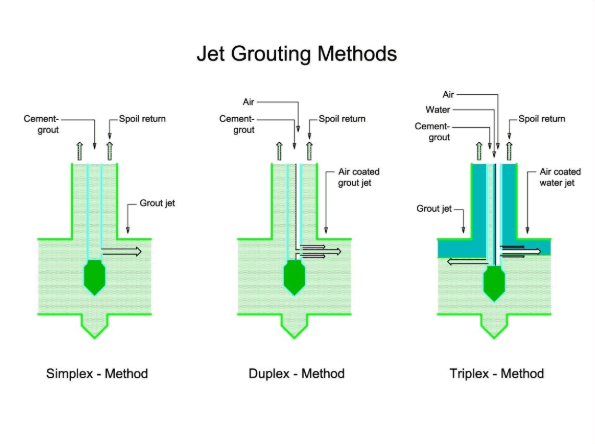
Based on the number of fluids used, this method is classified into three categories:
1. Single-Fluid System:
In this method, only grout is injected to mix with the soil. It is the simplest approach. Drilling is performed first; then, the grout is injected into the soil through nozzles at extremely high pressure (up to 600 bar) while the rotating rod is simultaneously retracted upward. This process mixes the high-velocity, high-energy grout with the surrounding soil.
2. Double-Fluid System:
The execution procedure is similar to the single-fluid system, with the exception that compressed air (at 12 bar) is injected simultaneously with the grout, surrounding the grout stream. This method achieves a larger radius of influence and superior performance, although it may lead to some grout waste. This method is more effective in coarse-grained, non-cohesive soils such as sand and gravel.
3. Triple-Fluid System:
In this method, water is first injected at high pressure (up to 600 bar), encased in a compressed air sheath (at 8–12 bar), to break down the soil structure. Subsequently, grout is injected at a lower pressure (40–70 bar) through a separate nozzle located below the water nozzle. This is done to transport the maximum amount of excavated soil particles to the surface while limiting the discharge of excess grout. In this method, high grout pressure is not required because the soil structure is already broken down by water and air, with the grout acting primarily as a filler. This technique is most effective in cohesive, fine-grained soils such as clay and silt.
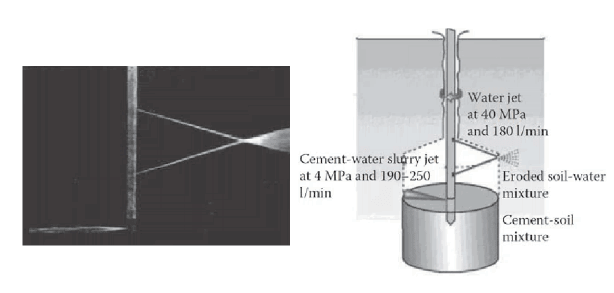
1. Cross Jet Grouting:
This technique utilizes two angled nozzles to create soil-cement columns of a uniform diameter across various soil types.
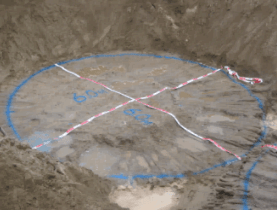
This advanced method creates larger soil-cement columns, ranging from 5 to 9 meters in diameter, which is equivalent to approximately 20 conventional jet grouting columns.
- Jet Dynamic Pressure
- Flow Rate
- Velocity of the Casing Air
- Soil Type and Characteristics
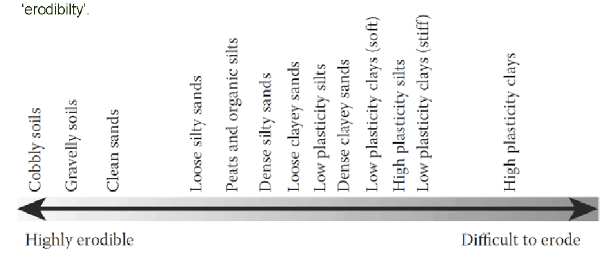
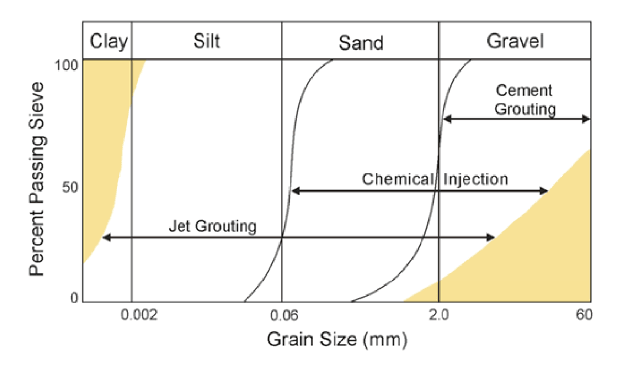
Regarding soil, it is crucial to consider the extent to which the soil structure is disrupted by the energy imparted from high-pressure injection. As illustrated in the accompanying figure, non-cohesive soils are eroded more readily. Conversely, the more cohesive the soil, the more challenging it becomes to break down its structure and enhance its strength using this method.
Below, you can observe the applicability range of grouting methods based on soil particle size distribution:
- Cement Silo
- Water Tanks
- Primary and Secondary Mixers
- Grout Pump
- Slurry Transfer Hoses
- Drilling and Grouting Rig
- Foundation Strengthening
- Slope Stabilization
- Tunnel Section Stabilization
- Excavation Support and Waterproofing
Water and cement are initially combined in the primary mixer at specific ratios. The water-to-cement ratio can be controlled using various methods, such as the Marsh funnel, density measurements, etc.
After mixing in the primary mixer, the slurry is pumped to the secondary mixer. The capacity of the secondary mixer is typically around five times that of the primary mixer. The main role of the secondary mixer is to provide a sufficient reserve of slurry to initiate the grouting operation.
The grout pump, integrated with the secondary mixer, transfers the slurry at the desired pressure (up to 1000 bar) through hoses to the rods of the drilling and grouting rig.
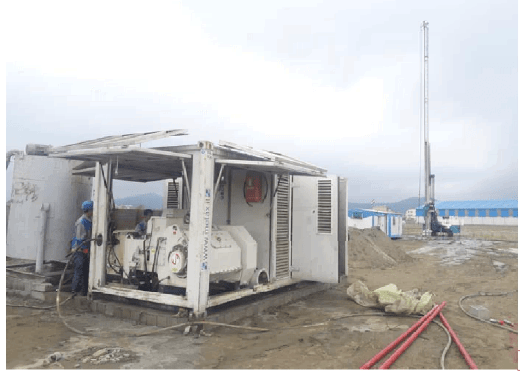
The injection of water at this stage serves two purposes:
- Preventing nozzle clogging by soil particles.
- Facilitating the drilling process.
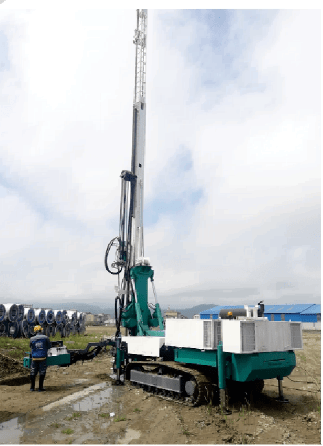
The injection process begins from the bottom of the borehole. The specific injection methodology is determined based on the soil type and test columns executed at the beginning of the project. This methodology includes parameters such as the rotation speed and upward extraction rate of the rod, as well as injection pressure and the water-to-cement ratio.
Control of the rotation and extraction speed can be performed either manually or automatically.
Important Execution Note:
When executing high-pressure injection columns, it is important to note that due to operational requirements, a minimum of 1 meter of surcharge (in the form of an embankment) is required at the execution site. This embankment is removed after the completion of the jet grouting columns.
Advantages of High-Pressure Injection (Jet Grouting)
- Reduction in soil permeability.
- Increase in soil strength.
- Reduction of soil settlement caused by surcharge.
- Prevention of liquefaction.
- In-situ ground improvement.
- Transformation of the ground into an integrated component of the soil-structure system.
- Possibility of quality control and verification.
- Lower mobilization costs compared to similar alternatives, such as pile construction.
- Very high execution speed.
- Lower execution costs compared to similar methods.
- Reduced noise and vibration in urban environments compared to alternative techniques.